
The sun as the only product
How Jacquemus turned Provence into a luxury brand, and why this strategy is imitated but never reproduced.
Analyses of campaigns, brands, collections and launches, seen through a curious eye. One review, one obsession at a time.
How Jacquemus turned Provence into a luxury brand, and why this strategy is imitated but never reproduced.
Nike released the Dn without any fanfare. And that’s exactly why the campaign works.
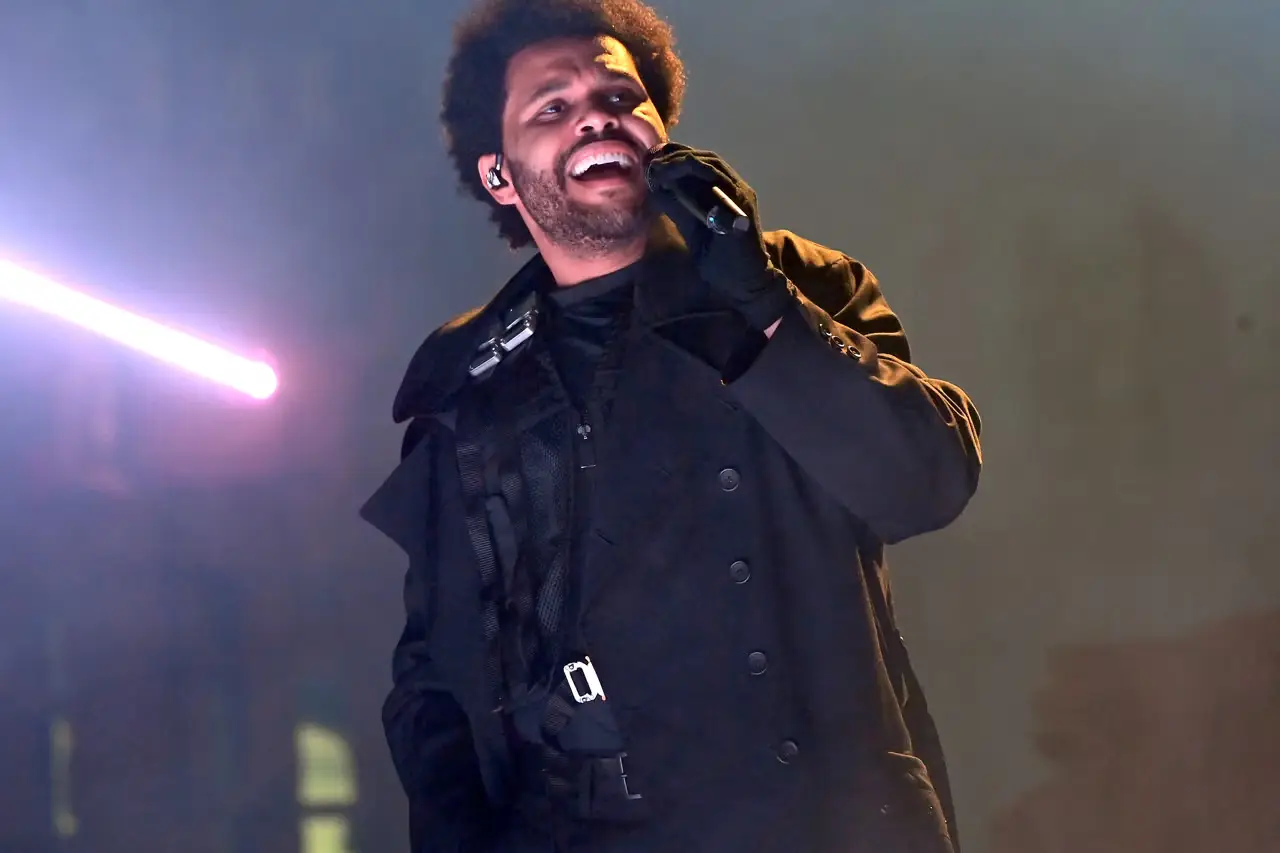
Hurry Up Tomorrow isn’t an album. It’s the death of a character, orchestrated like a film, sold like a secret.
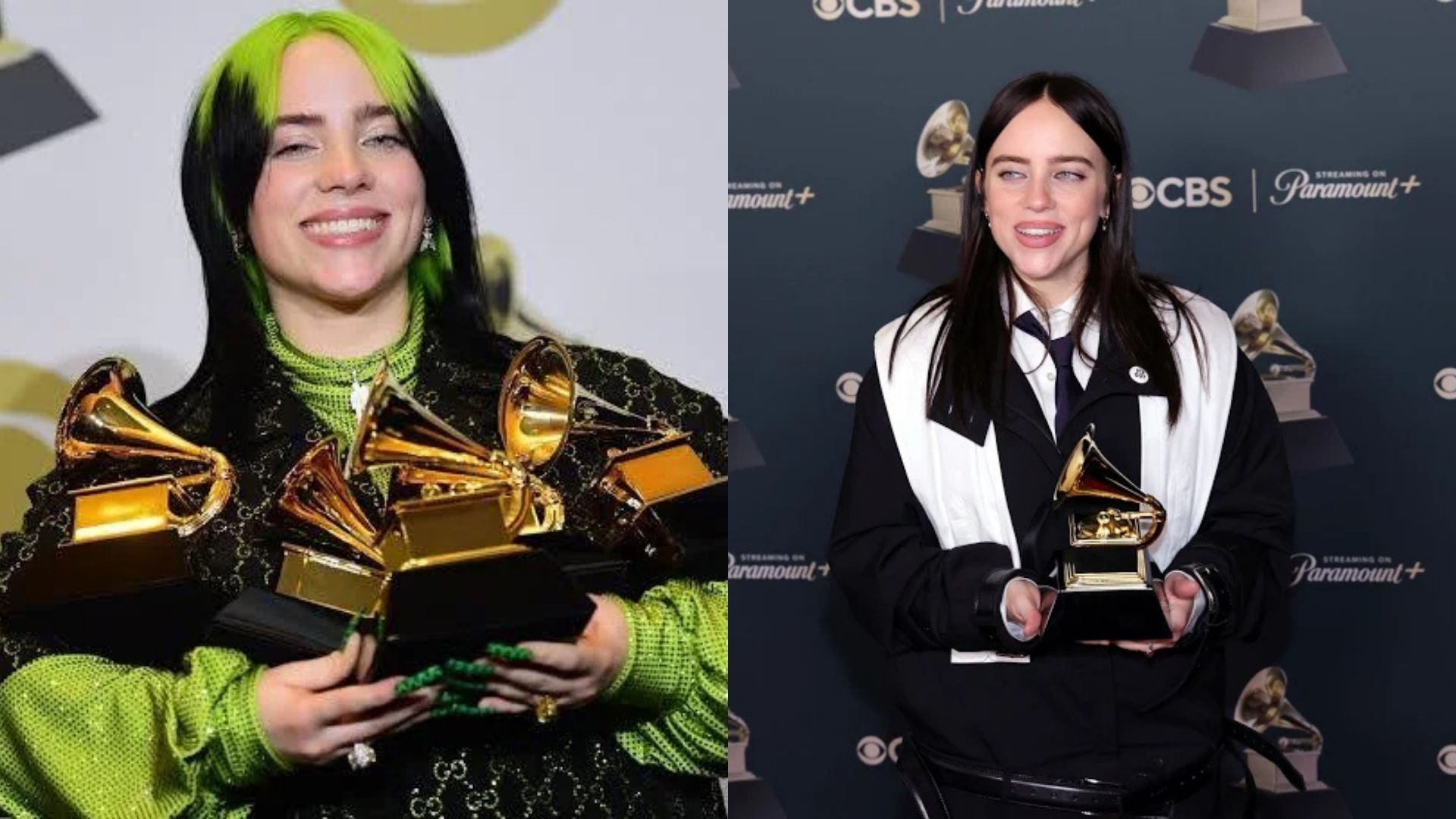
From XL neon to diaphanous silhouette. How Billie Eilish reinvented her image without betraying her fanbase, and why that’s so rare at this level.
The brand stopped selling a drink to become a studio, a channel and an events empire. A brand content case study.
The Row, Loro Piana, Bottega Veneta. How the absence of a logo became the ultimate sign of desirability.
A brand that sells as much Provençal dream as it does leather bags isn’t a fashion brand. It’s a film studio in disguise.
When you watch a Jacquemus show, you’re not really looking at clothes. You’re looking at a lavender field, a deserted beach at sunrise, a procession through the salt flats of the Camargue. The garments become almost secondary: they dress a story, they don’t carry it.
What Simon Porte Jacquemus grasped before many other houses is that fashion is no longer consumed in a boutique. It’s consumed on a screen, in an Instagram feed, in fifteen seconds. And on a screen, the garment is no longer enough. You need light, a setting, an emotion that etches itself in a single second.
The genius lies in a simple reversal. Where Chanel, Dior and Saint Laurent keep filming runways, Jacquemus films landscapes through which silhouettes pass. The brand doesn’t put on a display, it invites.
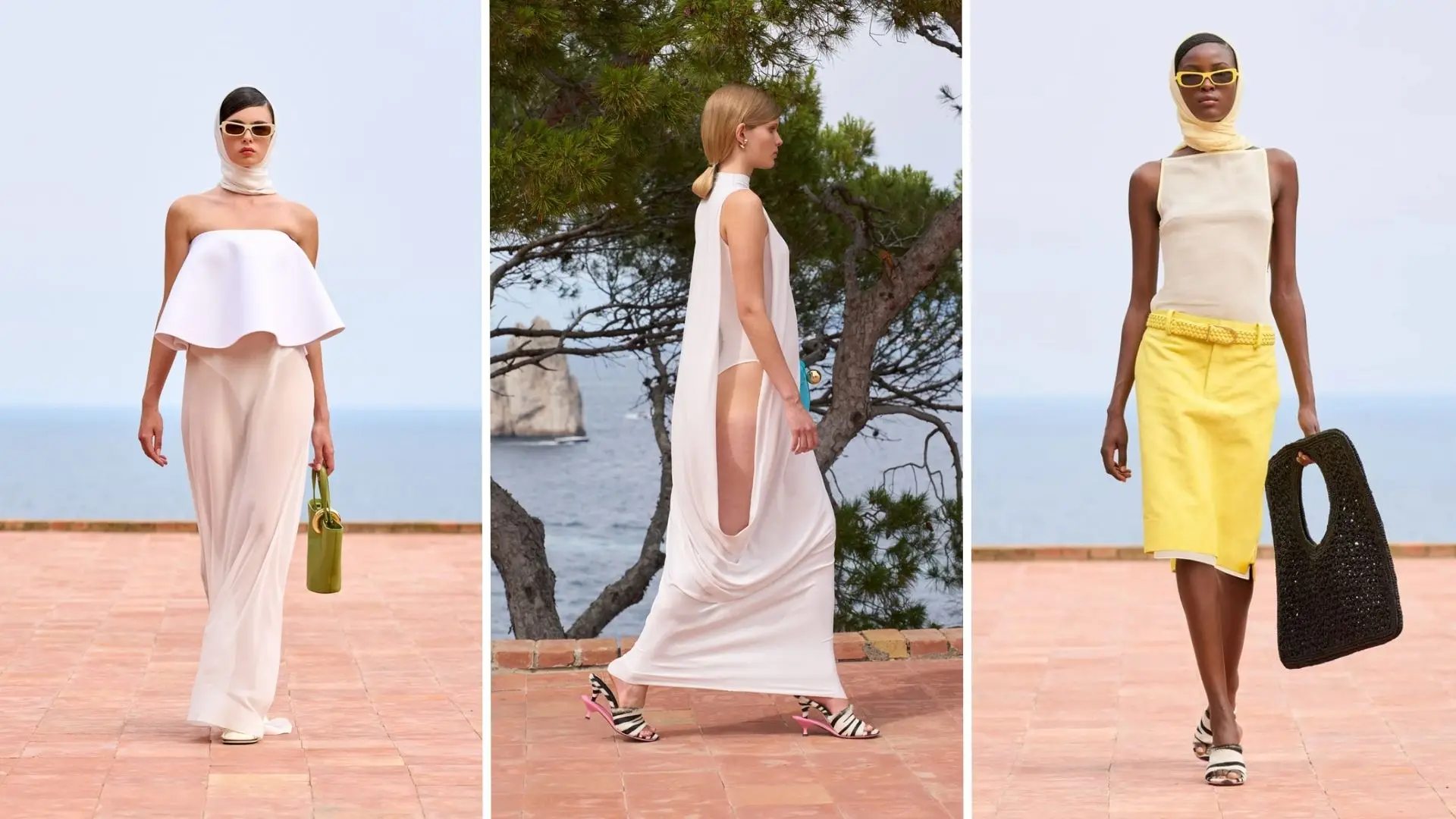
La Casa show, Casa Malaparte (Capri), June 2024. © Jacquemus. Photos: Kaitlin Serio
The strength of this strategy rests on an often underestimated point: the consistency of its imaginary territory. Jacquemus never changes its mental landscape. The south of France, golden light, a studied simplicity, the smile: it’s a visual grammar so strict that you recognise the brand without even seeing its logo.
Many have tried to copy the formula. Few succeed, and for one simple reason: they copy the aesthetic without copying the discipline. The discipline is refusing anything that might widen the territory. No urban campaign. No autumnal palette. No dark, somber looks. The territory is sacred.
It’s also a lesson in community management applied to haute couture: every campaign is built to be captured. The giant Le Bambino backpack rolling through the streets of Paris was seen, shared and parodied millions of times. It isn’t an advertising visual, it’s an event that spreads on its own.
What I take from this for my own projects: before asking “what will the product look like,” ask “what will the photo people take of it look like.” This isn’t cynicism, it’s experience design. And before defining a creative direction, you have to define the territory you forbid yourself.
Nike released the Air Max Dn without any media fanfare. No superstar headliner, no packed stadium. And that’s exactly why the campaign works.
To understand what Nike is doing with the Air Max Dn, you first have to look at what the brand isn’t doing. No 60-second ad during the Super Bowl. No campaign with an Olympic athlete. No slogan shouted from billboards in Times Square. The launch is almost whispered, and that’s precisely what makes it remarkable.
The Dn, short for Dynamic Air, doesn’t sell athletic performance measured in times or records. It sells a sensation: that of air circulating beneath the foot, pulsing, breathing. It’s an almost meditative promise from a brand that spent forty years celebrating effort, sweat and victory.
“Feel the Unreal,” the Nike Air Max Dn launch film, directed by Petra Collins, March 2024.
Since “Just Do It” in 1988, Nike has sold one and the same story: the story of surpassing yourself. The anonymous athlete who becomes a legend, effort that pays off, the body as a tool for victory. This grammar made the brand what it is today, but it’s starting to tire a generation that doesn’t see itself in the metaphor of permanent competition.
Gen Z, and particularly the creative fringe that shapes opinion on sneakers, no longer wants to “push itself.” It wants to find itself. It wants calm, care, meaning. Nike understood this, and the Dn is its silent answer to that cultural shift.
It’s a risky sidestep for a brand that built its empire on heroic bodies. Here, the hero is no longer the athlete. It’s the shoe itself. And behind this aesthetic choice hides a strategic one: making the Dn an object of lifestyle desire, not a performance tool.
Everything in the campaign serves this repositioning. The visuals saturated in orange and black evoke an inner fire without shouting performance. The slow motion that isolates the Dynamic Air sole turns it into a piece of design rather than a technical device. The sound design that mimics breathing replaces the energetic beats of Nike’s usual spots. Everything is deliberately softened.
This restraint is its greatest strength. In an age of excess, where every brand shouts louder than the last to exist in the Instagram feed, saying less gets noticed more. Silence becomes an event.
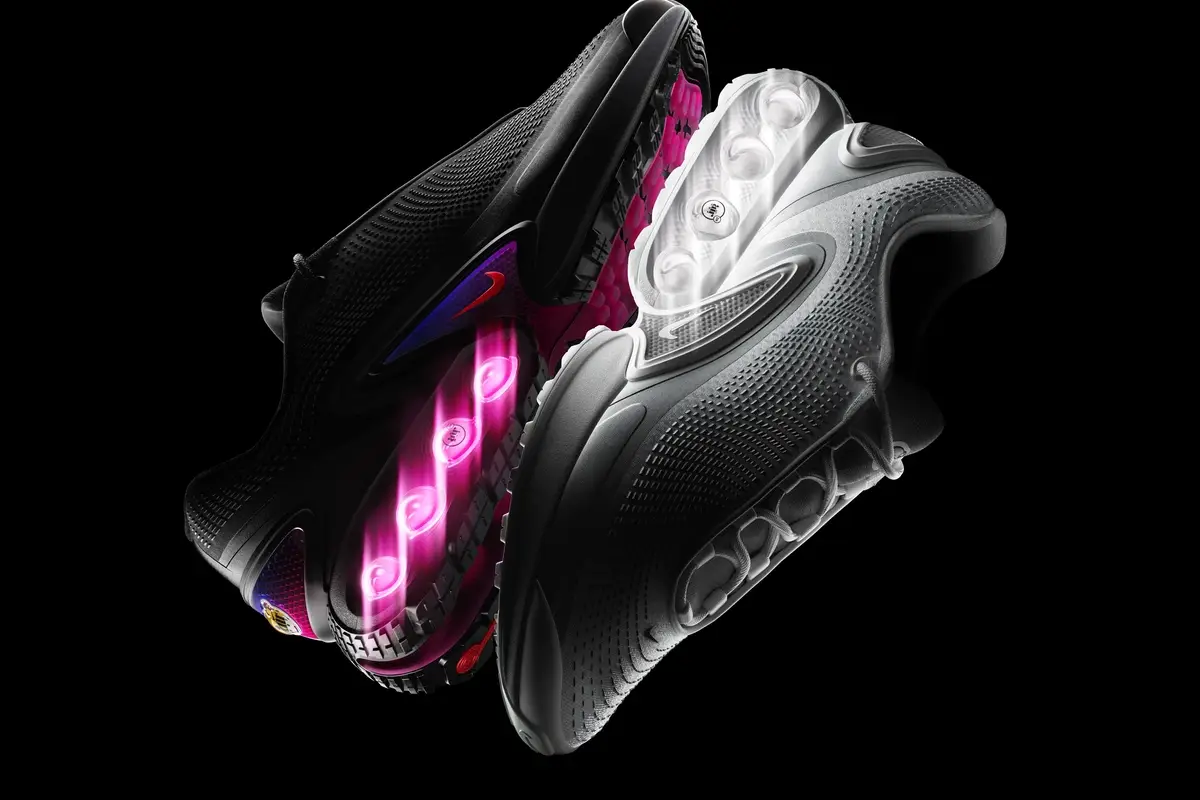
The Dynamic Air sole, the Air Max Dn’s brand-new technology. © Nike, 2024.
The campaign’s cross-channel consistency is its most impressive achievement. The same visual language on Instagram, in store, in the video ads, on SNKRS, in the launch emails. No dilution. No deviation. This discipline is rare for a brand that releases dozens of models a year.
The refusal of celebrity placement is the other strong signal. No LeBron James, no Cristiano Ronaldo, not even a rising running star. The product has to carry its own story, and it does. It’s a confident bet that says a lot about the maturity of Nike’s current design.
Finally, there’s a detail that seems unremarkable but says everything: the shoe’s name. “Dn” is unpronounceable, abstract, almost secret. Where the competition piles on lengthy names meant to evoke speed or science, Nike chooses mystery. In its treatment, it’s almost a luxury product.
First lesson: a powerful brand doesn’t need to prove its power with every release. Sometimes the strongest signal a brand can send is its quiet confidence. Nike doesn’t need to scream its name to be heard.
Second lesson: sensoriality isn’t the preserve of luxury. Sound, rhythm, light, texture, everything that belongs to a bodily experience rather than a rational argument can be applied to sport. The Dn proves that sports storytelling can be whispered without losing any of its power.
Third lesson, and perhaps the most useful for anyone who wants to work in sports communication: a sector’s codes are made to be broken by that sector’s leaders. A challenger brand that had released this same campaign would have been misunderstood. Nike can afford it because Nike has already proven itself. Strategic disruption isn’t a whim, it’s a privilege you have to earn.
Hurry Up Tomorrow isn’t an album. It’s the death of a character, orchestrated like a film, sold like a secret.
For ten years, Abel Tesfaye built The Weeknd as a character: a toxic crooner, a bloodied mask, a tragic hero of the night. The Hurry Up Tomorrow project isn’t a sequel. It’s an execution. The execution of the character who made him famous.
What makes this launch remarkable isn’t the music alone. It’s the total orchestration: a film in theaters, an album, a tour that literally ends on stage with the mask falling. Three media telling the same story, that of a voluntary artistic death.
Classic marketing would have done the opposite: maximise the character’s lifespan, pile on the features, extend the franchise. Tesfaye chooses absolute scarcity. He closes the book.
Official cover of Hurry Up Tomorrow, revealed in September 2024. © XO / Republic Records.
To grasp the scale of the gesture, you have to step back. Hurry Up Tomorrow is the final installment of a trilogy opened in 2020 with After Hours and continued in 2022 with Dawn FM. Three acts that fans read as a Dantean journey: hell, purgatory, paradise. Every cover, every music video, every tour staging points back to this narrative arc woven over five years.
This long-term construction is almost unheard of in today’s pop, where the industry pushes toward inflation: a single every three months, an album every two years, a feature whenever the opportunity arises. Tesfaye does the opposite. He thinks in terms of a complete work, not a discography. It’s an auteur’s logic applied to pop music.
Hurry Up Tomorrow arrives alongside a feature film of the same name, co-written by Tesfaye himself and directed by Trey Edward Shults. And this is where the strategy becomes brilliant: the film isn’t spin-off merchandise. It’s an integral part of the album. The two complement and answer each other, and only deliver their full meaning when heard and watched in parallel.
We’ve seen this model with Beyoncé’s Lemonade, with Frank Ocean’s Endless. But here it’s pushed further: the film doesn’t feed the album, it is the album in another form. A cross-narrative, where the film’s character echoes the musical one. And where the end of the film coincides with the end of the character. A total conclusion, across two media at once.
This decision has an obvious commercial cost. But it also has a massive artistic effect: it turns every listen into an event. When you know it’s the last time, you listen differently. The scarcity is no longer marketed, it’s real. And that authenticity changes the very nature of the product.
This is exactly what the luxury industry understood long ago, and what pop often forgets: availability kills desire. Hermès doesn’t deliver a Birkin on demand. Rolex rations its Daytonas. Tesfaye applies this logic to music. By closing the franchise, he increases the value of every track in his back catalogue.
The visual campaign supports this choice with relentless discipline. Gone are the saturated neons of After Hours. The blood red remains, but desaturated, like a memory fading. The typographic glitch on the visuals, letters bleeding in red and blue, announces the break in signal, the end of transmission.
The album cover is itself a manifesto: a close-up of Abel Tesfaye, his face bare, without the battered makeup of After Hours or the greying beard of Dawn FM. Just him. The character falls, the man appears. It’s probably the most emotional piece of communication he has ever produced, and the simplest.
First lesson: an artistic brand lives as much on its endings as on its beginnings. Knowing how to close is as rare as knowing how to launch. And it’s often the gesture that turns a career into a body of work.
Second lesson, for anyone who wants to do community management in music or fashion: long-term narrative consistency beats short-term virality. Tesfaye didn’t try to create buzz with every release. He built an arc over five years. The result is a fanbase that follows not a character, but a vision.
And finally, the most inspiring one for me: the best storytellers know when to fall silent. In an industry that survives on volume, silence has become a creative act. Tesfaye reminds us of this by closing the book when he could still write more chapters. Perhaps that’s the true meaning of the word “auteur.”
From XL neon to diaphanous silhouette. How Billie Eilish reinvented her image without betraying her fanbase, and why that’s so rare at this level of fame.
When Billie Eilish broke out in 2019 with When We All Fall Asleep, her image was as strong as her music. Neon green hair, XXL clothes to hide the body, horror-pop aesthetic. It was a political stance as much as an aesthetic one: refusing the sexualisation imposed on young female artists, refusing the pop mould, refusing to please.
Five years later, when Hit Me Hard and Soft drops, the image has completely mutated. Natural brown hair, fitted silhouettes, diaphanous visuals, immersion in water and light. It’s almost a different artist. And yet her audience follows her. That’s the feat worth dissecting.
Most pop artists who radically change their image lose part of their fanbase. Miley Cyrus with Bangerz. Justin Bieber with Purpose. The change is read as a betrayal of what created the initial attachment. Billie Eilish, on the other hand, makes her turn without losing her people. Why?
Because she doesn’t change the DNA, she only changes the shell. The DNA is the vulnerability, the introspection, the whispered voice, the refusal of the spectacular. All of that stays. What changes is the form, and the audience subconsciously knows that form has to evolve so it doesn’t become a caricature.
Billie Eilish, behind the scenes of HIT ME HARD AND SOFT, 2024.
One detail that doesn’t lie: the signature colour stays. The electric green that defined her first era, neon roots, saturated visuals, reappears everywhere on HMHAS, but treated differently. No more aggressive neon. In its place, a deep, almost underwater green that bathes the visuals of the “Lunch” video and the album cover.
This chromatic continuity does a lot of work. Subconsciously, the eye recognises the brand even when everything else changes. It’s a lesson directly applicable to branding: keep one strong signal of recognition, let everything else evolve.
“CHIHIRO,” Billie Eilish, Hit Me Hard and Soft (2024).
The other remarkable element is the release strategy. No pre-album singles. No repeated teasers. The album drops all at once, as an “experience to be heard in one sitting,” with no skipping possible on the platforms during the first few days. It’s an anti-streaming gesture in a streaming world.
The bet is enormous: in the age of playlists and fragmented attention, asking people to listen to an album in order is a gentle provocation. But it’s also what makes it memorable. For two weeks, people didn’t just talk about potential singles, they talked about the work.
First lesson, for anyone who wants to do community management over the long term: a brand’s (or an artist’s) identity isn’t its aesthetic of the moment. It’s what remains when the aesthetic changes. If you can’t answer the question “what must never change?”, you don’t really know what your brand is.
Second lesson: signature codes can evolve without disappearing. Billie’s neon green becomes deep green, but it stays green. This chromatic discipline over five years is rarer than you’d think in mainstream pop.
And finally, perhaps the most important: the audience is smarter than you think. It accepts transformation if it senses it’s sincere. It rejects rebranding if it senses it’s calculated. And the line between the two is exactly what a good communicator’s craft must learn to inhabit.
In thirty years, Red Bull stopped selling a drink to become a production studio, a TV channel and an empire of sporting events. The can is now just a logo placed on top of the spectacle.
When you drink a Red Bull, you’re not buying a taste. You’re buying access: a Formula 1 podium, a dive off a cliff, a man jumping from space. The drink is almost a detail. It’s the entry ticket to a spectacle the brand produces itself.
It’s the reversal few brands dare to make. Coca-Cola sponsors events. Nike dresses athletes. Red Bull, on the other hand, owns the events, the teams and the channels that broadcast them. It didn’t buy space in the media: it became a medium.
The official mission is caffeine and taurine in a 250 ml can. The real business is attention. And Red Bull learned to manufacture attention on an industrial scale. In 2007, it created Red Bull Media House, a genuine production company: video, photography, a magazine (The Red Bulletin), a TV channel (Servus TV), a record label (Red Bull Records). A drinks brand structured like a Hollywood studio.
Red Bull Stratos: Felix Baumgartner’s jump from the stratosphere, October 14, 2012. 8 million live viewers on YouTube, a record at the time. © Red Bull.
The logic fits in one sentence. Rather than paying media to talk about it, the brand becomes the medium everyone is talking about. The content doesn’t advertise the product, the content is the product. The can funds the spectacle, the spectacle sells the can. A closed loop that runs on its own.
It’s the definition of brand content pushed to its limit. Not “a brand that makes content,” but “content so strong you forget there’s a brand behind it.” A Red Bull video of a wingsuit flight through a canyon is watched for the flight, not for the logo. And that’s exactly why the logo wins.
The other pillar is the refusal to rent visibility. Red Bull doesn’t buy a banner at someone else’s event, it invents its own. Red Bull Rampage in freeride mountain biking, the Cliff Diving World Series, Crashed Ice, the Flugtag, the Soapbox Race… formats it owns, that exist nowhere else, and into which no competitor can buy its way with a cheque.
And when it enters an established sport, it buys the entire team, not a logo on a jersey. Red Bull Racing in F1 with several world titles, RB Leipzig, Salzburg, the New York Red Bulls, Bragantino. Owning rather than sponsoring means owning the story, the images, the fanbase and the calendar. The sponsor is a guest. The owner writes the rules.
Stratos is the peak of this logic. October 2012: Felix Baumgartner jumps from the edge of space, at 39 kilometres of altitude, and breaks the sound barrier in freefall, live. 8 million people watch simultaneously on YouTube, a record for the time, sixteen times the previous one. No thirty-second ad could have bought that. Red Bull didn’t buy the moment, it created it. Today, that footage has accumulated close to a billion views.
The paradox: the more Red Bull invests in content, the less it talks about its drink. No close-up on the ingredients, no taste argument, barely any product in the spectacular films. The can appears as a discreet signature, sometimes just the logo in a corner. The product fades behind the emotion.
Because Red Bull doesn’t sell a liquid, it sells an idea: energy, risk, pushing your limits. “Red Bull gives you wings” isn’t a promise about caffeine, it’s a promise about life. And an idea sells at a far higher margin than a taste.
This is where the strategy becomes a textbook case for anyone in communication: when your content is strong enough, you no longer need to push the product. The product becomes the natural conclusion of a story people already love. You don’t sell. You let people buy in.
Red Bull Rampage 2025, men’s final. A freeride mountain-bike event created and owned by the brand: a format no one can sponsor, you have to own it. © Red Bull.
First lesson: a strong brand doesn’t talk about its product, it tells a world. On social media, the account that only pushes promos dies. The one that builds a universe, a recurring format, a recognisable emotion, endures. Think in content pillars, not advertising posts. The product will settle on top of them.
Second lesson, and it speaks directly to the events world: creating your own format always beats sponsoring someone else’s. Rather than buying a booth at a third party’s event, invent the occasion your community will associate only with you. A signature format is an asset you own. A sponsorship is rent you pay.
Third lesson: the best brand content doesn’t look like advertising. The day your content is watched, shared and saved for its own sake, the brand has already won. Aim for content that would survive without the logo, because that’s precisely the content that makes the logo unforgettable. Value comes before visibility.
The Row, Loro Piana, Bottega Veneta. The most desirable brands of the moment share one thing in common: no visible logo. In a world saturated with signs, absence has become the strongest sign of all.
For twenty years, luxury shouted. Monograms everywhere, XXL logos, colours screaming the price. Then something flipped. The most coveted pieces of the moment carry no visible brand: an anonymous camel coat, a bag with no visible clasp, a cashmere so fine that only its owner knows what it cost.
This is quiet luxury, or stealth wealth: a luxury that refuses signage. The Olsen sisters’ The Row, Loro Piana at LVMH, Bottega Veneta… none of them plasters a logo. Their promise is the exact opposite of the logo: if you have to ask the brand, you’re not the target.
Behind the aesthetic lies a real desirability strategy. Because in a world where anyone can buy a logo, real or fake, the only distinction left is the one you can’t see from across the street. And that one is priceless, by design.
The logo was invented to reassure and to signal. To reassure the buyer: this is authentic. To signal to others: I can afford it. Quiet luxury deliberately kills both functions: the piece reassures no one and signals nothing, except to insiders. It becomes a password between people in the know.
The Row pushes this logic furthest. Founded in 2006 by Mary-Kate and Ashley Olsen, the brand has never advertised, its founders have no social media, and its prices start where others’ stop. In its early days, not even a label: just a plain gold chain sewn into the garment. “We wanted to know whether a good product would sell without a logo,” Mary-Kate summed up. The answer is now worth close to a billion dollars.
Loro Piana plays the same score, but on material. No logo, but a cashmere and a vicuña so rare that quality becomes the signature. You don’t read the brand, you touch it. The signal leaves the eye and moves into the hand. It’s harder to copy than a monogram, and above all impossible to counterfeit.
The Row, the Olsen sisters’ brand with no advertising and no logo: a report on its philosophy, design and stores. Video: YouTube.
The most radical gesture came from Bottega Veneta. In January 2021, at the height of “everything must be on Instagram,” the house deleted all its social accounts. Instagram, Facebook, Twitter: wiped, 2.5 million followers in one stroke, without so much as a press release. A luxury brand voluntarily vanishing from the exact place where brands fight to exist.
The logic is quiet luxury applied to community management. Rather than chasing everyone’s attention, cultivate that of a few. Bottega replaced its feed with a downloadable digital magazine and lets its fans and ambassadors post in its place. Scarcity of presence becomes a status signal. You don’t follow Bottega: Bottega lets itself be found. Kering, its parent company, stood by the choice publicly and confirmed that it was paying off.
It only works because the product carries the brand without a logo. The intrecciato weave, the recognisable shapes: the DNA is in the object, not in the badge. When your product speaks, you can afford silence everywhere else. The bet held under Daniel Lee, then Matthieu Blazy, and today Louise Trotter: the brand hasn’t left the top 10 most desired houses since late 2022.
Bottega Veneta, Autumn-Winter 2024/2025 show: the house’s DNA reads in the gesture and the material, without a logo. Video: YouTube.
The most fascinating thing is that these brands turn absence into an event. In February 2024, The Row banned phones at its Paris show. No photos, no video, no stories. Instead, a notebook and a pencil handed to each guest. Some cried elitism. But the absence of images didn’t reduce the show’s impact, it multiplied it tenfold. Everyone talked about a show no one had seen.
This is the heart of the paradox: in a world of oversharing, showing nothing has become the most powerful staging of all. Desire feeds on distance. Where most brands overfeed the feed to stay visible, these houses organise scarcity. And scarcity, on social media, is the only content you can’t scroll past without thinking about it.
This movement didn’t come from nowhere. The 2020s created the perfect ground: post-pandemic restraint, distrust of ostentation, the “old money” aesthetic spreading on TikTok. The series Succession turned its billionaires’ logo-free suits into a cultural code. Gwyneth Paltrow’s trial outfits were decoded like a runway. Quiet luxury became a mood before it became a market.
The final paradox: a style built on discretion became the most commented-on aesthetic on social media. Millions of videos explaining how to “look rich” without a logo. The absence of a sign became a sign that mass culture started to chase. Which, mechanically, will exhaust it: once everyone knows the code, the code loses its power. The elite will move again. It’s the eternal cycle of distinction.
First lesson: in a world saturated with signs, the absence of a sign becomes the strongest sign. You don’t always win by posting more, louder, more colourful. Sometimes the most powerful positioning is restraint: a rarer voice, a cleaner feed, a chosen silence. Silence, when it’s deliberate, speaks.
Second lesson: a product that speaks lets you stay silent. Bottega was able to leave Instagram because its object carried its identity. Before cutting a communication channel, make sure your product, your experience or your gesture carries the brand on its own. Solid branding is precisely what earns you the right to discretion.
Third lesson: every distinction eventually democratises, so anticipate the next turn. Quiet luxury is already going mainstream, its exclusivity eroding. A good communicator reads the cycle: when a code spreads, value has already begun migrating elsewhere. Don’t chase the trend at its peak, spot the next form of scarcity.