N°03 · Music · Launch
The Weeknd
says goodbye.
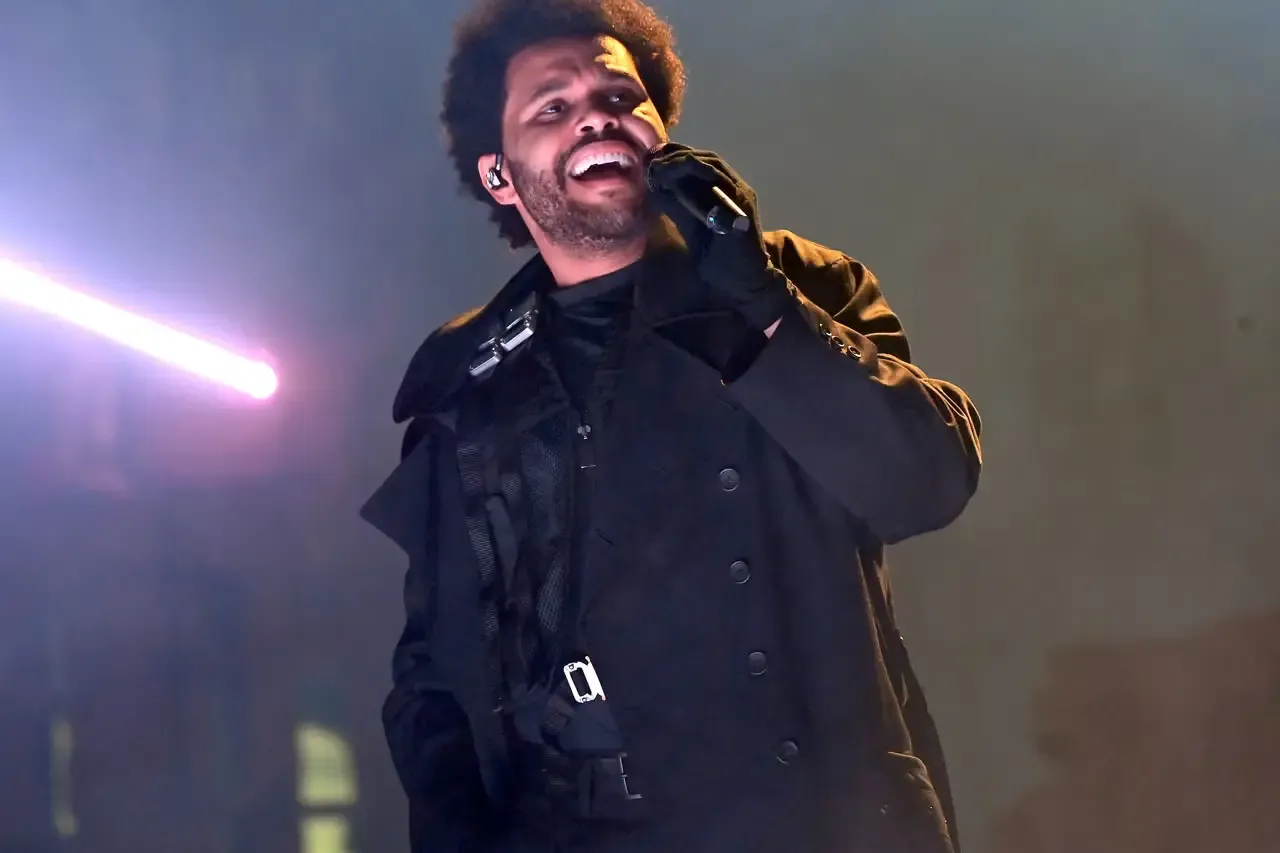
Hurry Up Tomorrow isn’t an album. It’s the death of a character, orchestrated like a film, sold like a secret.
- Subject
- Hurry Up Tomorrow
- Release
- January 2025
- Angle
- Endgame strategy
- Author
- N.D.F
- 9 min read
For ten years, Abel Tesfaye built The Weeknd as a character: a toxic crooner, a bloodied mask, a tragic hero of the night. The Hurry Up Tomorrow project isn’t a sequel. It’s an execution. The execution of the character who made him famous.
What makes this launch remarkable isn’t the music alone. It’s the total orchestration: a film in theaters, an album, a tour that literally ends on stage with the mask falling. Three media telling the same story, that of a voluntary artistic death.
Classic marketing would have done the opposite: maximise the character’s lifespan, pile on the features, extend the franchise. Tesfaye chooses absolute scarcity. He closes the book.
The trilogy as architecture
To grasp the scale of the gesture, you have to step back. Hurry Up Tomorrow is the final installment of a trilogy opened in 2020 with After Hours and continued in 2022 with Dawn FM. Three acts that fans read as a Dantean journey: hell, purgatory, paradise. Every cover, every music video, every tour staging points back to this narrative arc woven over five years.
This long-term construction is almost unheard of in today’s pop, where the industry pushes toward inflation: a single every three months, an album every two years, a feature whenever the opportunity arises. Tesfaye does the opposite. He thinks in terms of a complete work, not a discography. It’s an auteur’s logic applied to pop music.
The film as extension, not graft
Hurry Up Tomorrow arrives alongside a feature film of the same name, co-written by Tesfaye himself and directed by Trey Edward Shults. And this is where the strategy becomes brilliant: the film isn’t spin-off merchandise. It’s an integral part of the album. The two complement and answer each other, and only deliver their full meaning when heard and watched in parallel.
We’ve seen this model with Beyoncé’s Lemonade, with Frank Ocean’s Endless. But here it’s pushed further: the film doesn’t feed the album, it is the album in another form. A cross-narrative, where the film’s character echoes the musical one. And where the end of the film coincides with the end of the character. A total conclusion, across two media at once.
Killing your character
when it earns the most
is the supreme creative act.
The cost and value of scarcity
This decision has an obvious commercial cost. But it also has a massive artistic effect: it turns every listen into an event. When you know it’s the last time, you listen differently. The scarcity is no longer marketed, it’s real. And that authenticity changes the very nature of the product.
This is exactly what the luxury industry understood long ago, and what pop often forgets: availability kills desire. Hermès doesn’t deliver a Birkin on demand. Rolex rations its Daytonas. Tesfaye applies this logic to music. By closing the franchise, he increases the value of every track in his back catalogue.
The visual identity of the ending
The visual campaign supports this choice with relentless discipline. Gone are the saturated neons of After Hours. The blood red remains, but desaturated, like a memory fading. The typographic glitch on the visuals, letters bleeding in red and blue, announces the break in signal, the end of transmission.
The album cover is itself a manifesto: a close-up of Abel Tesfaye, his face bare, without the battered makeup of After Hours or the greying beard of Dawn FM. Just him. The character falls, the man appears. It’s probably the most emotional piece of communication he has ever produced, and the simplest.
What I take from it
First lesson: an artistic brand lives as much on its endings as on its beginnings. Knowing how to close is as rare as knowing how to launch. And it’s often the gesture that turns a career into a body of work.
Second lesson, for anyone who wants to do community management in music or fashion: long-term narrative consistency beats short-term virality. Tesfaye didn’t try to create buzz with every release. He built an arc over five years. The result is a fanbase that follows not a character, but a vision.
And finally, the most inspiring one for me: the best storytellers know when to fall silent. In an industry that survives on volume, silence has become a creative act. Tesfaye reminds us of this by closing the book when he could still write more chapters. Perhaps that’s the true meaning of the word « auteur. »